
Quick Answer: Marine stings Gili Islands snorkelers and divers run into most often come from three very different creatures: jellyfish, sea urchins, and stonefish. Each looks different, stings differently, and needs a different first response. Jellyfish stings usually look like red, whip-like welts. Sea urchin injuries are mostly about broken-off spines stuck in the skin. Stonefish stings are the most dangerous of the three and need medical attention every time. Knowing which one you’re dealing with changes what you should do in the first few minutes.
Marine Stings Gili Islands Snorkelers and Divers Encounter Most
The waters around Gili Trawangan, Gili Air, and Gili Meno are part of the Coral Triangle, one of the richest reef ecosystems on Earth. That richness is exactly why snorkelers and divers love it, and exactly why marine stings happen here regularly.
Here’s how to tell the three most common culprits apart at a glance:
- Jellyfish — a soft, often translucent bell shape with trailing tentacles, usually seen drifting in open water rather than sitting on the reef.
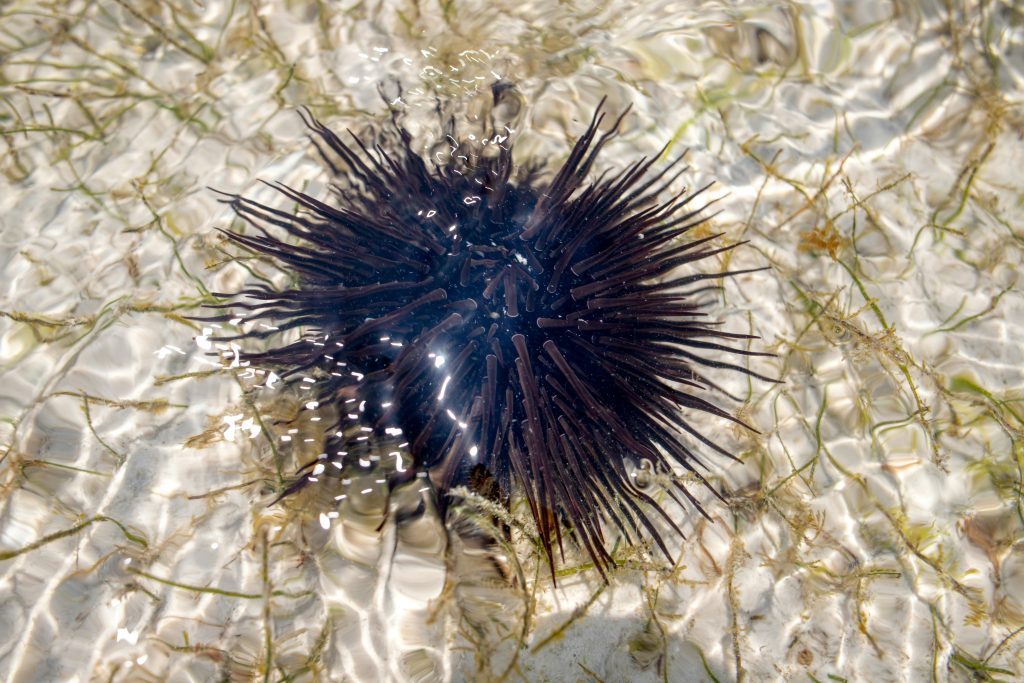
- Sea urchins — dark, round, spiny balls sitting on rocks or coral, usually spotted by touch (a foot brushing against one) before they’re spotted by sight.
- Stonefish — the hardest to see by far. They look like an ordinary lump of rock or coral rubble sitting on the sea floor, which is exactly the camouflage that makes them dangerous to step on.
Jellyfish Stings: What They Look Like and How to Treat Them
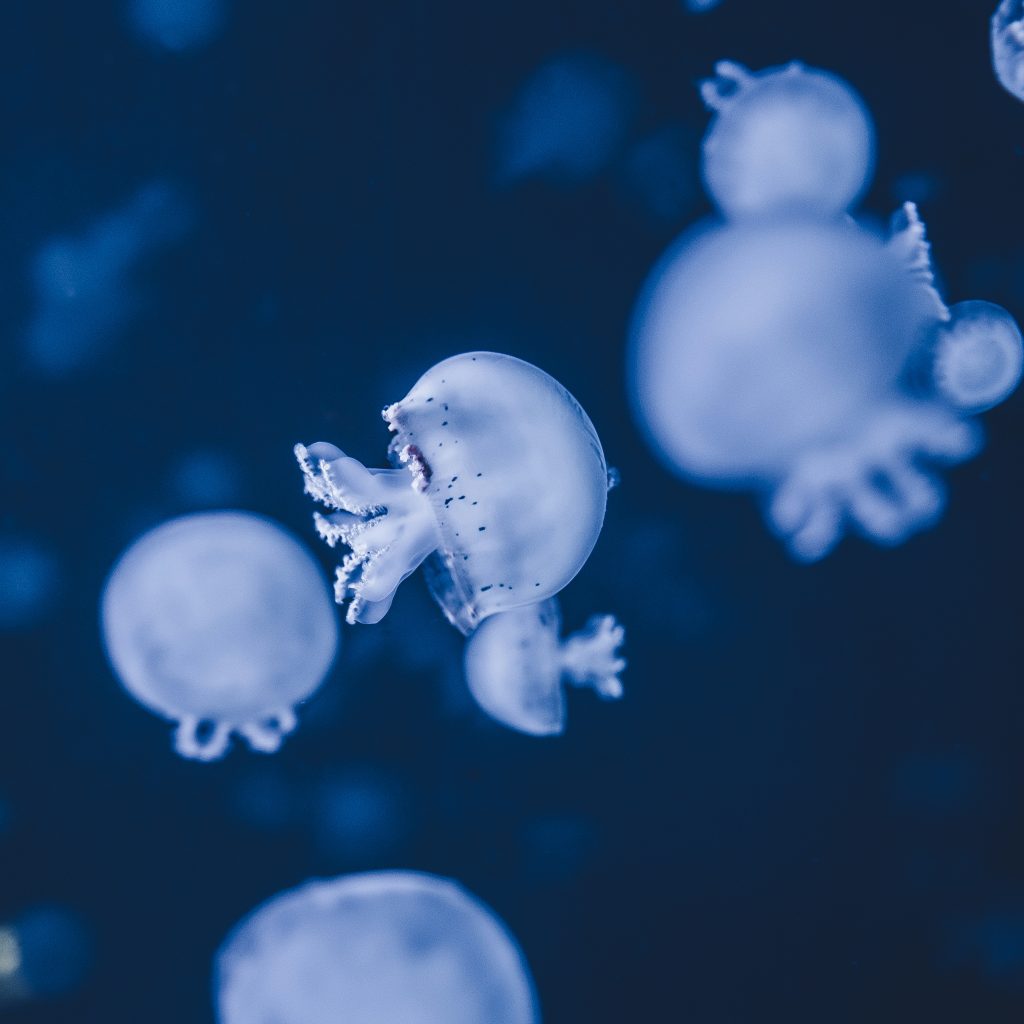
A jellyfish sting typically leaves a red, raised, whip-like mark where a tentacle touched the skin, often with intense burning pain that starts immediately.
What to do:
- Rinse with seawater, not fresh water. Fresh water can trigger any stinging cells still attached to the skin to fire again, making things worse rather than better.
- Remove any visible tentacle fragments using tweezers or the edge of a card, never bare fingers.
- If the tentacles look thick and box-shaped rather than string-like, dousing the area in vinegar for about 30 seconds can help deactivate unfired stinging cells before you remove them.
- Immerse the area in hot water, as hot as the person can comfortably tolerate (around 40–45°C), for 20 to 45 minutes. This is the treatment with the most consistent research support for reducing pain and venom activity.
- Watch for symptoms beyond the local sting. Dizziness, difficulty breathing, or widespread rash need immediate medical attention, not home treatment.
Sea Urchin Injuries: Spines, Not Poison, Is the Main Problem
Mariola Grobelska / Unsplash)
Most sea urchin injuries aren’t really about venom. They’re about broken-off spines lodged under the skin, which can cause ongoing pain, irritation, and infection if left in place.
What to do:
- Soak the area in hot water (as hot as comfortably tolerable) to ease pain and help loosen the spines.
- Don’t try to dig out every spine yourself. Small fragments often work their way out on their own, and aggressive digging can push them in deeper or introduce infection.
- Clean the area and apply an antiseptic once the worst of the pain has settled.
- Get a clinic to check it if spines are deep, numerous, or near a joint, or if the area looks infected days later. A tetanus check is also worth confirming.
Stonefish Stings: Why This One Is a Medical Emergency
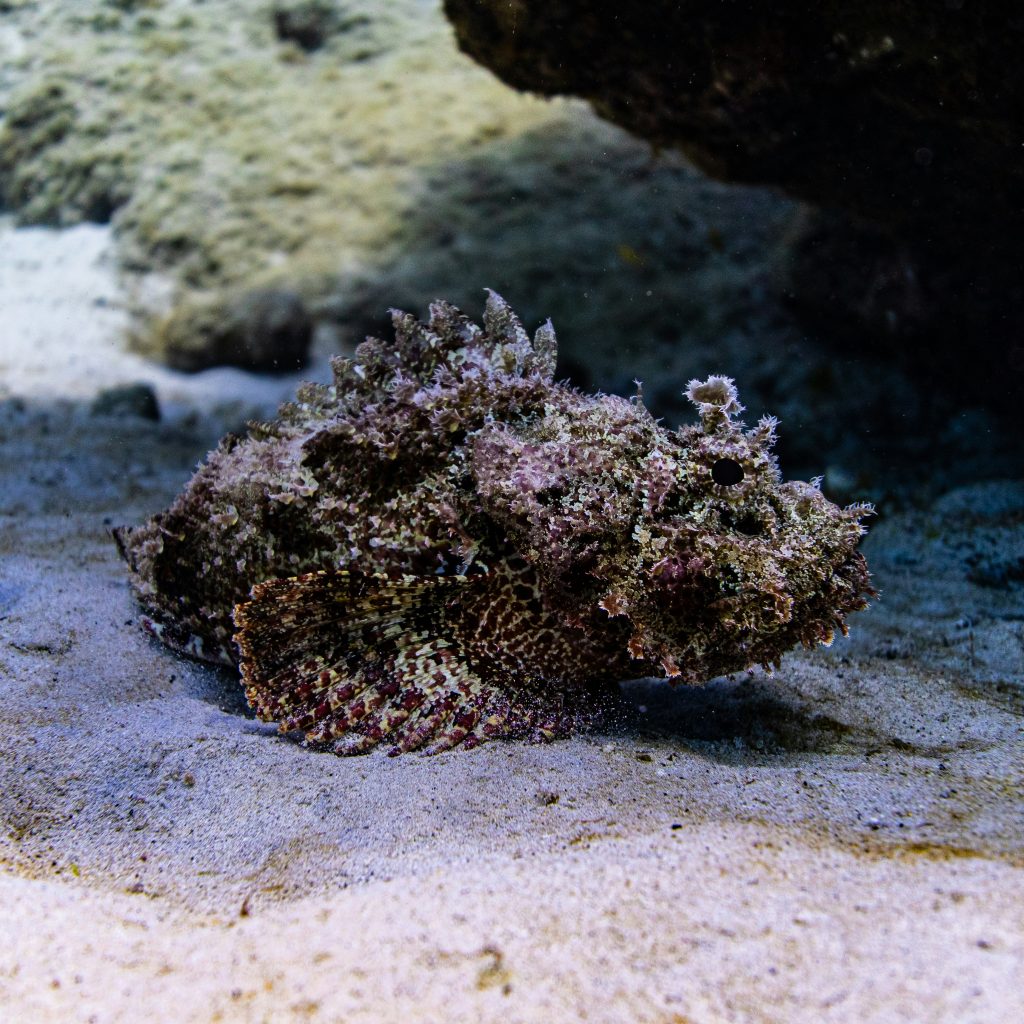
Stonefish are the reef hazard that deserves the most respect. Their dorsal spines deliver one of the most painful stings of any marine creature, and severe cases can cause serious systemic effects beyond the sting site itself.
What to do:
- Get out of the water immediately and keep the affected limb still.
- Immerse the wound in hot water as soon as possible. This is genuinely one of the few marine sting treatments with strong evidence behind it for pain relief.
- Head to a clinic right away, even if the pain seems to be easing. Stonefish venom can cause effects beyond local pain, and severe cases may need antivenom, which most general clinics won’t stock on-site.
- Don’t assume a “rock” on the sea floor is actually a rock. Their camouflage is the entire point, and it’s why experienced divers still get stung.
If a stonefish sting happens on any of the Gili Islands, our 24-hour emergency care and medical evacuation coordination can get you to the right level of care quickly if antivenom or further treatment is needed.
What NOT to Do After a Marine Sting
A few widely repeated pieces of advice actually make things worse:
- Don’t use fresh water on a jellyfish sting. It’s one of the most common mistakes, and it can worsen the sting rather than clean it.
- Don’t rely on urine as a treatment. Despite the popular myth, there’s no good evidence it helps, and in some cases the change in fluid concentration can trigger more stinging cells to fire, the same problem as fresh water.
- Don’t ignore a stonefish sting because the pain seems manageable at first. Systemic symptoms can develop after the initial pain, so a clinic visit is worth it regardless of how you feel in the first few minutes.
- Don’t pick up unfamiliar objects on the reef or sea floor, even ones that look like rocks or shells. This single habit prevents most stonefish and cone snail injuries.
How to Avoid Marine Stings While Snorkeling or Diving in the Gili Islands
- Wear reef shoes when wading through shallow water or walking on the reef flat at low tide.
- Shuffle your feet rather than stepping down firmly in areas with poor visibility or unfamiliar terrain.
- Look before you touch or grab anything on the reef, and avoid standing on coral or rock formations entirely.
- Consider a rash guard or stinger suit for extra protection, especially during jellyfish season or in murky water.
- Ask your dive or snorkel operator about current conditions. Local guides usually know if jellyfish have been spotted recently.
Key Takeaways
- Marine stings Gili Islands visitors most often encounter come from jellyfish, sea urchins, and stonefish, each needing a different first response.
- Jellyfish stings need seawater, not fresh water, plus hot water immersion for pain relief.
- Sea urchin injuries are mostly about removing spines safely, not treating venom.
- Stonefish stings are a genuine medical emergency and need a clinic visit every time, regardless of how the pain feels at first.
- Reef shoes, shuffling your feet, and never touching unfamiliar objects on the reef prevent most of these injuries in the first place.
Frequently Asked Questions
Does peeing on a jellyfish sting actually help?
No. This is one of the most persistent beach myths, and there’s no good evidence it works. In some cases, changing the fluid around the sting site can trigger more stinging cells to fire, making the pain worse rather than better. Seawater and hot water immersion are the treatments with actual evidence behind them.
How do I know if a sting needs a clinic visit instead of home treatment?
Get checked if you notice symptoms beyond the sting site itself, such as difficulty breathing, dizziness, a widespread rash, or spreading pain. Any stonefish sting needs a clinic visit regardless of how it feels, since serious effects can develop after the initial pain eases.
Are jellyfish common around the Gili Islands?
Jellyfish presence varies by season and conditions, and local dive and snorkel operators are usually the best source for current sightings. Treating any tentacle contact with seawater rinsing and hot water immersion is a safe default regardless of species.
What’s the difference between a sea urchin injury and a stonefish sting?
Sea urchin injuries are mostly mechanical (spines stuck in the skin) rather than dangerously venomous, and hot water plus careful spine removal usually resolves them. A stonefish sting involves genuine venom that can cause effects well beyond the sting site, and it needs medical attention every time.
Can I still snorkel safely in the Gili Islands after reading this?
Yes. Marine stings are common enough to know about, but serious injuries are still relatively rare with basic precautions. Reef shoes, not touching unfamiliar objects, and asking local guides about current conditions prevent the vast majority of incidents.
Sources
- American Red Cross. Jellyfish Stings: Symptoms & Treatment.
- PMC / National Library of Medicine. First Aid Treatment of Jellyfish Stings: A Systematic Review.
- PMC / National Library of Medicine. Hot-Water Immersion or Ice-Pack Treatment as First Aid for Human Envenomation by Marine Animals? Review of Literature.
- PMC / National Library of Medicine. Evidence-Based Management of Box Jellyfish Stings.
Reviewed by Muhammad Nashirul Islam, MD